Pool water testing is the foundation of effective pool care.
Without accurate readings, chemical adjustments become guesswork, and water problems can escalate quickly.
For most residential pools, the first readings to test are free chlorine and pH, followed by total alkalinity, cyanuric acid, and calcium hardness as needed.
Knowing what to test, how often to test, and what the results mean helps you catch issues early and avoid unnecessary chemical corrections.
When these levels stay within their ideal ranges, pool water is easier to maintain and less likely to develop cloudy water, irritation, scale, or corrosion.
The goal is not to hit exact numbers but to keep each reading within its ideal range so the whole system works together.
What to Test First and Why
Free chlorine and pH are the two most important readings for day-to-day pool care. Free chlorine tells you whether active sanitizer is available to protect the water. pH affects chlorine efficiency, swimmer comfort, and whether the water tends toward corrosion or scale.
If you are short on time, test chlorine and pH first.
If the pool keeps drifting, bring total alkalinity into the conversation.
Alkalinity acts as the water’s pH buffer and helps explain why pH stays stable or keeps drifting.
Cyanuric acid, or stabilizer, protects chlorine from sunlight and matters most in outdoor pools.
Calcium hardness helps control surface balance and is especially important for plaster and concrete pools.
Salt matters in saltwater pools because the chlorinator depends on it.
Ideal Pool Water Chemistry Levels
- Free chlorine: At least 1 ppm; at least 2 ppm if using CYA or stabilized chlorine
- pH: 7.0 to 7.8, with many pools best maintained at 7.4 to 7.6
- Total alkalinity: 80 to 120 ppm
- Cyanuric acid: 30 to 50 ppm in most outdoor pools
- Calcium hardness: 200 to 400 ppm depending on surface type
- Salt: Follow the salt chlorinator manufacturer’s operating range
How to Test Pool Water Correctly
Accurate pool testing starts with a consistent routine.
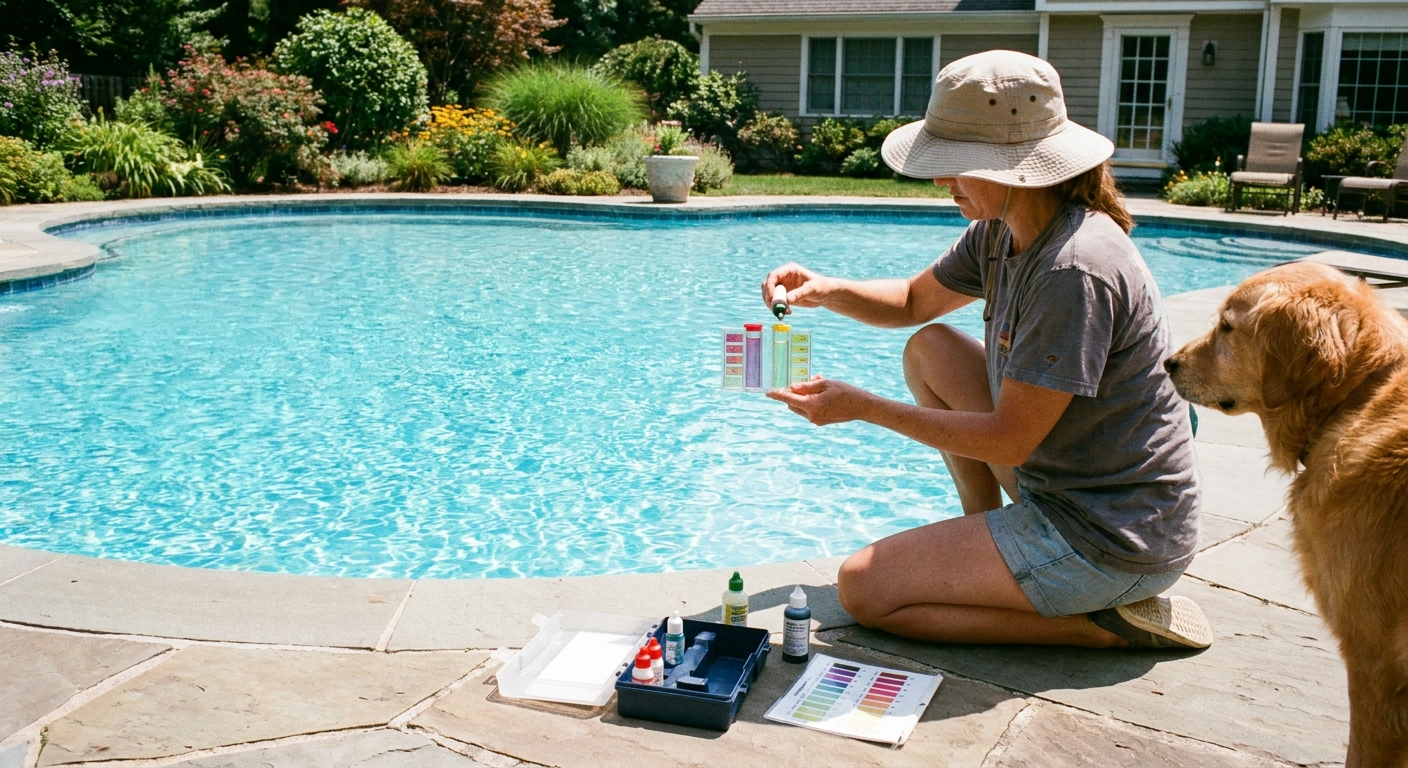
Take a clean sample from elbow depth, not from the surface, where sunscreen, debris, and recent chemical additions can affect the reading.
Sample away from return jets, skimmers, and dead spots so the water better reflects normal circulation.
Use the test exactly as directed.
With test strips, read the colors at the correct time, keep the bottle sealed and dry, and compare results in clear light.
With a liquid test kit, follow the steps closely, including the water amount, drop count, and testing sequence.
A liquid kit is only more reliable when it is used carefully.
If a reading looks off, confirm it before making a larger adjustment.
A strip can show that something may be wrong, but a liquid kit is often better for confirming a result that will guide a meaningful chemical change.
Do not add several chemicals based on one uncertain test.
Correct the most important issue first, let the pool circulate, and then test again before making another change.
How Often Should You Test Pool Water
For most residential pools, test free chlorine and pH daily during swim season. Test total alkalinity weekly. Test CYA and calcium hardness monthly, or sooner after major water changes or recurring balance problems. In saltwater pools, check salt regularly, especially after dilution or system warnings.
Test more often when the pool is under extra stress.
That includes after heavy rain, large water additions, heavy swimmer load, contamination, at opening, after major chemistry adjustments, when chlorine will not hold, or when the pool becomes harder to manage.
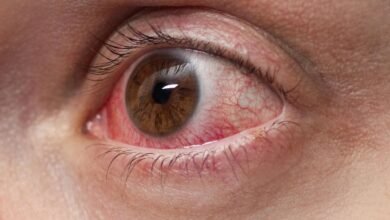
Also test sooner if you notice cloudy water, unusual odor, eye irritation, roughness, scale, staining, or harsher-feeling water.
Common Pool Water Chemistry Problems and Solutions
Low free chlorine means the pool is not holding enough active sanitizer. Add chlorine, let the pool circulate, and retest. If chlorine drops again soon after, test CYA and check for recent sun, heavy use, rain, or debris.
High pH reduces chlorine efficiency and increases scale risk. Lower pH, let the water circulate, and retest. If pH rises again, test total alkalinity before making another pH-only correction.
Low pH makes the water harsher and more corrosive. Raise pH, let the water mix fully, and retest. If pH drops again or stays unstable, test total alkalinity and review recent rain or refill water.
High total alkalinity usually shows up as pH that keeps climbing after correction. Lower pH, let the pool circulate, and retest. If pH rises again, start correcting total alkalinity instead of repeating the same pH adjustment.
If both pH and alkalinity are low, start by raising alkalinity first because the water does not have enough buffering capacity to hold pH steady.
Let the water circulate, retest, and then adjust pH only if it is still low after alkalinity improves.
If both pH and alkalinity are high, lower pH gradually with an acid product and retest both numbers after circulation.
Seasonal Pool Maintenance and Chemistry
Seasonal pool maintenance gets easier when you keep the same core habits all year and adjust only for temperature, debris, and pool use.
In spring, restore circulation first, clean next, then balance the water. That order prevents rework.
During summer, heat and sunlight increase chlorine demand, and frequent swimming introduces oils, sunscreen, and fine debris. Daily skimming and weekly testing become essential.
In fall, clean first, balance next, protect plumbing, then install the cover.
In colder climates, wait until water temperatures are near 65°F or lower before closing.
In winter, focus on cover integrity and water level in northern states, while southern regions continue debris control and occasional testing.
Keeping Pool Chemistry on Track
The most effective approach to pool water care is a consistent testing routine combined with targeted corrective actions.
By testing free chlorine and pH frequently, monitoring alkalinity and CYA at regular intervals, and making one adjustment at a time with proper circulation and retesting, most pool owners can maintain clear, balanced water throughout the swim season.
For a deeper reference on ideal ranges, testing methods, and step-by-step correction procedures, refer to the iGarden 2026 pool chemistry guide. It provides clear target values, explains what each reading means, and helps you move from test result to the right adjustment without guesswork.
Seasonal shifts, heavy use, and weather events will always challenge water balance.
But a steady testing habit, combined with an understanding of how pH, alkalinity, and sanitizer interact, gives you the control you need to keep your pool safe, comfortable, and easy to manage all year long.