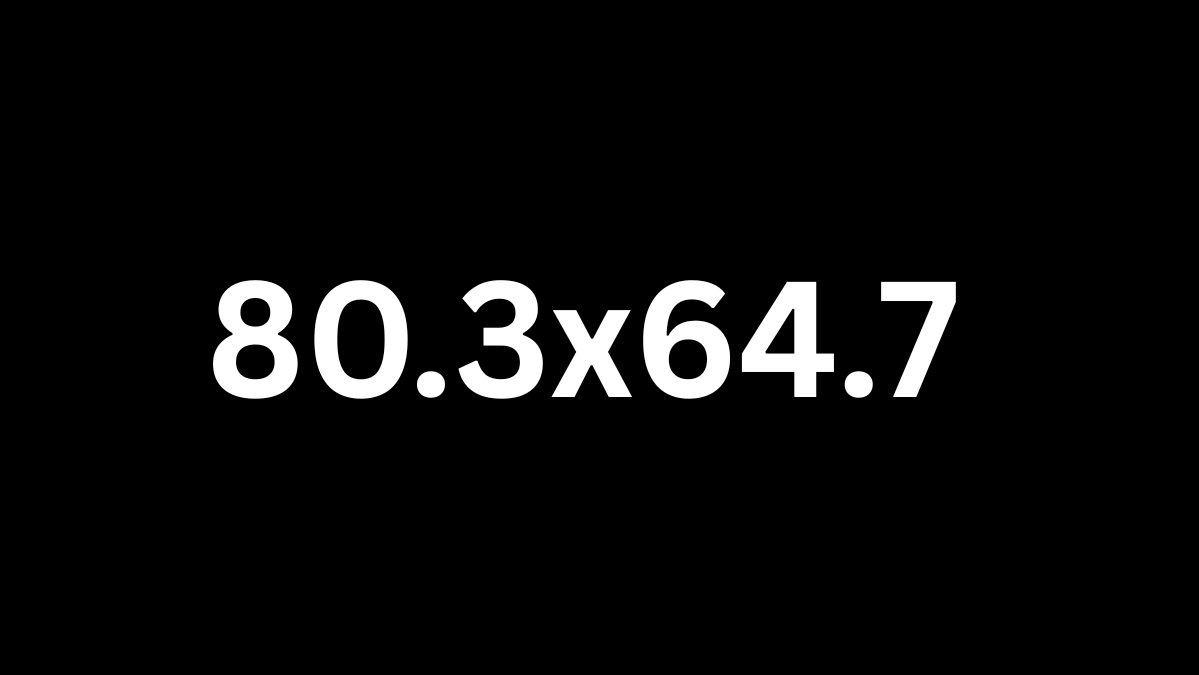
Introduction to 80.3×64.7
At first glance, “80.3×64.7” might look like just another set of numbers, but in reality, it carries more meaning than meets the eye. Numeric expressions like this are often used to represent dimensions, ratios, or measurements across a wide variety of fields—from design and manufacturing to digital displays and engineering. Understanding what these numbers signify depends largely on the context in which they are used.
In most cases, a format like “80.3×64.7” refers to two measurable values multiplied or compared together. These could represent width and height, length and breadth, or even resolution dimensions. For instance, in design or architecture, such figures could define the size of a physical object, while in digital environments, they might represent screen or image dimensions.
What makes 80.3×64.7 particularly interesting is its precision. The decimal points suggest that the values are not arbitrary but carefully calculated. This level of specificity is often associated with technical fields where accuracy is critical, such as engineering, product design, or scientific measurement.
The Importance of Precision in Measurements
Precision plays a crucial role when dealing with measurements like 80.3×64.7. Even a slight deviation in values can lead to significant differences in outcomes, especially in industries like manufacturing or construction. When dimensions are specified down to decimal points, it indicates a need for exactness that cannot be compromised.
For example, in product manufacturing, a dimension of 80.3×64.7 could define the size of a component that must fit perfectly into a larger assembly. If the measurements are off—even by a fraction—the part might not function correctly or could cause the entire system to fail. This is why professionals rely heavily on precise figures when designing and producing items.
Additionally, precision is not just about accuracy—it also reflects professionalism and expertise. When someone uses exact measurements like 80.3×64.7, it demonstrates attention to detail and a deep understanding of the subject matter. It shows that the work is being carried out with care and intention rather than guesswork.
Possible Applications of 80.3×64.7
The versatility of a measurement like 80.3×64.7 allows it to be applied in numerous fields. One common application is in screen or display dimensions. In this context, the numbers could represent the width and height of a display area, possibly in millimeters, centimeters, or inches depending on the system being used.
Another potential application is in printing and graphic design. Designers often work with precise dimensions to ensure that their layouts fit perfectly on a page or screen. A size like 80.3×64.7 could define the boundaries of a design element, such as a banner, card, or image frame.
Engineering is yet another field where such measurements are highly relevant. Mechanical parts, machine components, and structural elements all require exact dimensions to function properly. A measurement like 80.3×64.7 could represent the size of a panel, plate, or other critical component within a larger system.
Interpreting the Numbers Correctly
Understanding what 80.3×64.7 means requires more than just reading the numbers—it involves interpreting them correctly within their context. The “x” typically indicates multiplication or separation between two dimensions, but its exact meaning depends on how the measurement is being used.
For instance, in a dimensional context, 80.3 might represent width while 64.7 represents height. However, in some technical scenarios, the order could be reversed, or the values might represent entirely different parameters such as depth and width. This is why context is essential when interpreting such figures.
Units of measurement also play a significant role. Without knowing whether the values are in inches, centimeters, millimeters, or pixels, the numbers alone are incomplete. Always consider the unit alongside the values to fully understand their significance and avoid misinterpretation.
Why Context Matters
Context is everything when it comes to understanding measurements like 80.3×64.7. The same numbers can mean entirely different things depending on where and how they are used. In a digital setting, they might refer to pixel dimensions, while in a physical setting, they could represent actual size.
For example, if 80.3×64.7 is used in a digital image, it might define the resolution or aspect ratio. In contrast, in a manufacturing blueprint, it could specify the size of a component that needs to be produced. Without context, it is impossible to determine the exact meaning of the measurement.
This is why professionals always include additional information alongside numerical values. Labels, units, and descriptions help clarify the purpose and application of the measurement, ensuring that it is understood correctly by everyone involved.
Practical Considerations When Using Measurements
When working with dimensions like 80.3×64.7, there are several practical considerations to keep in mind. First and foremost is accuracy. Always double-check measurements to ensure they are correct before using them in any application. Errors at this stage can lead to costly mistakes later on.
Another important factor is consistency. Make sure that all measurements within a project use the same unit system. Mixing units—such as inches and centimeters—can lead to confusion and incorrect calculations. Consistency helps maintain clarity and ensures that all components fit together as intended.
Finally, consider the tools you are using to measure or apply these dimensions. High-quality tools and software can help maintain accuracy and reduce the risk of errors. Whether you are working in design, engineering, or any other field, using the right tools is essential for achieving precise results.
Conclusion
The expression “80.3×64.7” may seem simple, but it holds significant meaning depending on its context. Whether used in design, engineering, manufacturing, or digital applications, such measurements represent precision, accuracy, and careful planning. Understanding how to interpret and apply these numbers is a valuable skill that can make a big difference in the quality of your work.
By paying attention to context, units, and accuracy, you can ensure that measurements like 80.3×64.7 are used effectively. These seemingly small details often have a big impact, highlighting the importance of precision in both professional and everyday tasks.
In the end, it’s not just about the numbers—it’s about what they represent and how they are used. Mastering this understanding allows you to approach any measurement with confidence and clarity, making you more effective and reliable in your field.